What the D.C. Circuit actually decided about the FCC's RF limits
On August 13, 2021, the U.S. Court of Appeals for the D.C. Circuit held that the FCC had not explained why its 1996 radio-frequency limits protect people against harms other than cancer, and sent that part of the agency's 2019 decision back for a reasoned answer. The same opinion upheld the FCC on cancer and rejected the environmental-review claim. The limits themselves stayed in force, and the court said plainly that it was taking no side in the science.
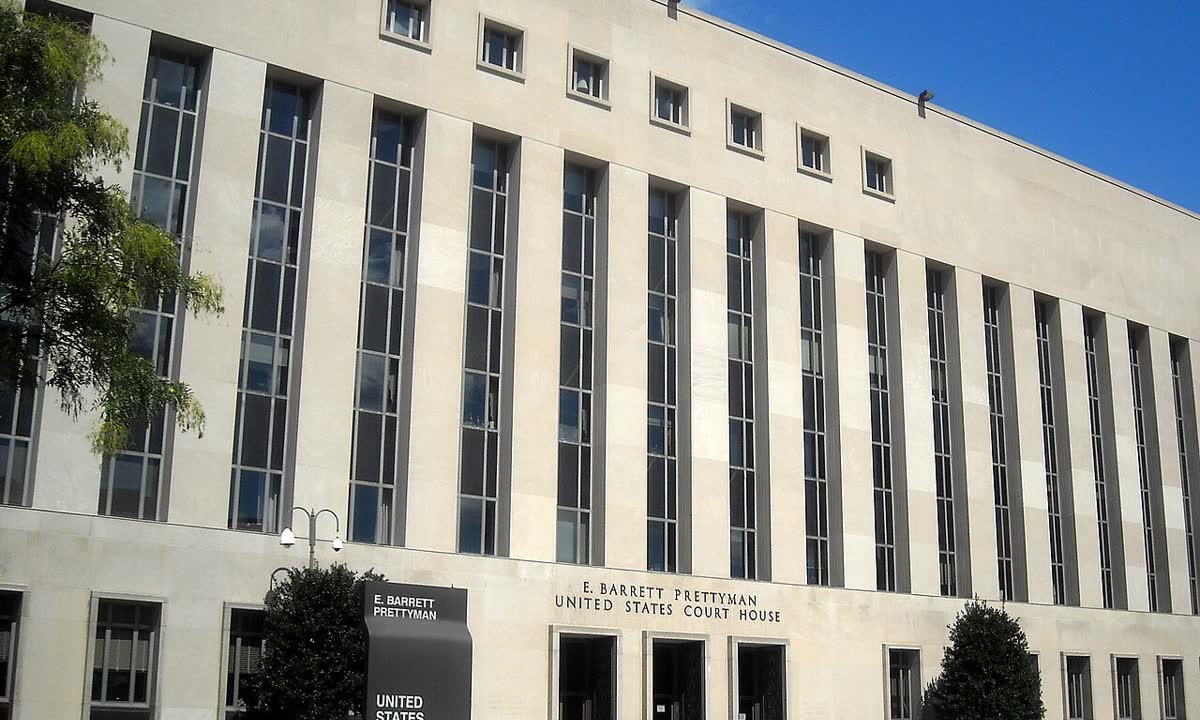
The case is Environmental Health Trust v. FCC, No. 20-1025, reported at 9 F.4th 893. Judge Wilkins wrote for the court, joined by Judge Millett. Judge Henderson dissented in part. Everything below comes from the opinion itself and from FCC filings, with page numbers where they help.
What was being challenged
In December 2019 the FCC closed a Notice of Inquiry it had opened in 2013 on whether its exposure limits were still adequate. That decision is part of FCC 19-126, which said the record gave "no appropriate basis" to propose changes.
Two groups of petitioners sued. Environmental Health Trust, Consumers for Safe Cell Phones and two individuals filed in the D.C. Circuit in January 2020. Children's Health Defense and nine individuals, four of them listed as doctors, filed in the Ninth Circuit a month later, and that petition was transferred and consolidated. They argued under two statutes: the Administrative Procedure Act, claiming the FCC ignored significant comments, and the National Environmental Policy Act.
The standard of review mattered. A decision not to start a rulemaking gets a high degree of deference, and both the majority and the dissent agreed on that. The majority still held that the FCC had to offer more than "mere conclusory statements" when shown evidence that the factual premise of its rules might have eroded.
Issue by issue, what the court decided
| Issue the petitioners raised | What the court decided |
|---|---|
| Non-cancer effects below the limits (reproductive, neurological, about 200 comments describing "radiation sickness") | FCC failed to give a reasoned explanation. Relying on short FDA statements and on other agencies' silence was not enough |
| Cancer, including IARC's "possibly carcinogenic" classification and the 2018 NTP and Ramazzini rat studies | FCC's response was adequate. Not mentioning the IARC monograph "does not epitomize reasoned decision making" but did not make the order arbitrary |
| Phone testing procedures (against a mannequin head, up to 2.5 cm from the body) | Explanation inadequate, because it rested on the unexplained premise that exposure below the limits causes no harm |
| Children | Inadequate. The FCC's point that testing is conservative "is not the point" |
| Long-term exposure, pulsed or modulated signals, the spread of devices, Wi-Fi and 5G | Inadequate for the same reason |
| Environmental harm, including an Interior Department letter on migratory birds | The FCC "completely failed even to acknowledge" these comments |
| Property rights, disability law, cost-benefit analysis, burden of proof | Not reviewed. Nobody had raised them with the FCC first |
| NEPA: closing the inquiry required an environmental assessment | Rejected. There was no ongoing federal action |
Why the FDA's statements did not carry the order
The FCC's main defense was that it had followed the FDA, the agency with a statutory program on electronic product radiation. The 2019 order cited three FDA items: a web page saying the weight of evidence had not linked phones to health problems, a February 2018 statement on the NTP study, and an April 24, 2019 letter saying "no changes to the current standards are warranted at this time."
The majority found all three conclusory. They said what the FDA concluded without saying why, in light of the specific studies in the record. The court compared them to statements it had rejected in two earlier cases, American Horse and American Radio Relay League. It also pointed out that the 2019 letter dealt with the NTP rodent study and did not discuss non-cancer effects at all.
The holding on this point is narrow. The court agreed the FCC may lean on outside experts. What it may not do is adopt another agency's unexplained conclusion as its own reasoning: "The Commission may turn to the FDA to provide such an explanation, but if the FDA fails to do so, as it did in this case, the Commission must turn elsewhere or provide its own explanation."
The FCC's argument that commenters never proposed a usable alternative limit also failed. The 2013 inquiry had asked about consumer information and precautionary steps too, and those needed no new limit.
What the court did not decide
The court was blunt about its own limits: "we take no position in the scientific debate regarding the health and environmental effects of RF radiation." The panel added that "there may be good reasons" why the studies in the record do not justify changing the guidelines.
Four things follow from that:
- No new exposure limit was set, and none was suggested.
- The 2019 order was not vacated, as the FCC's later court filing confirms, so the 1996 limits never stopped applying.
- The cancer holding went the FCC's way.
- The FCC was not required to do a new environmental review just to close the inquiry. The court noted it might need one if it ever proposes to revise the limits.
On the environment, the court went out of its way to say the FCC could find the link between RF radiation and environmental harm "too weak to warrant an amendment." Its complaint was silence: "All we hold now is that the Commission should have said something about its sister agency's view rather than ignore it altogether."
The partial dissent
Judge Henderson would have denied the petitions in full. In her view the majority built its remand on five research articles drawn from a record of more than 10,500 pages, and those articles were "nothing if not tentative." She went through them. One literature summary she examined listed 31 human studies with no significant behavioral effect against 20 with an effect, and at least four of those 20 found improvements. The Interior letter itself conceded that no independent field studies had been done in North America on tower radiation and migratory birds.
She also saw no legal problem with the FCC relying on the FDA, since Congress gave the FDA the job of running the federal radiation control program for electronic products.
The majority answered that the record held much more than five articles, pointing to material from the American Academy of Pediatrics, the Council of Europe, the cities of Boston and Philadelphia and several medical associations. It added that a dissent cannot supply reasoning the agency never gave.
What "remand" means in practice
A remand without vacatur leaves the rule in place and hands the agency homework. The FCC can come back with the same limits and a fuller explanation. The court gave it three specific assignments: justify the testing procedures for phones and other portable devices; address children, long-term exposure, the ubiquity of wireless devices and technology changes since the 1996 update; and address environmental effects. The opinion set no deadline.
- 5 years
- Time the FCC acknowledged had passed since the remand, in its September 2026 court filing
- 10,500+
- Pages in the record before the court, per the partial dissent
- May 18, 2026
- Date a mandamus petition asked the court to order an answer within 90 days
- 9 months
- Minimum the FCC says it needs after the October 22, 2026 comment deadline
Source: FCC opposition to mandamus, No. 26-1121, filed Sept. 25, 2026.
Here is how the five years played out, from the documents:
- August 2021: remand issued.
- May 18, 2026: Children's Health Defense, joined by Environmental Health Trust and three individuals, asked the D.C. Circuit for a writ of mandamus (No. 26-1121).
- August 26, 2026: the court ordered the FCC to respond within 30 days.
- September 17, 2026: the FCC's Office of Engineering and Technology released Public Notice DA 26-997 in ET Docket 13-84, asking for fresh comment on the three remanded issues.
- September 22, 2026: the notice ran in the Federal Register at 91 FR 60128, with comments due October 22, 2026.
- September 25, 2026: the FCC asked the court to deny mandamus and said it would need at least nine months after October 22 to adopt an explanation. By our arithmetic, nine months from October 22 lands on July 22, 2027.
The notice is narrow. It covers only submissions filed between the 2013 inquiry and the 2019 decision, the record the court reviewed. It says the FCC will give weight to commenters with health and safety expertise. Meta-analyses that pool studies of mixed quality and repetitive personal testimony will count for little. It asks pointed questions about replication, blinding, dose-response and whether lab setups resemble real US deployments. It also quotes the dissent's criticisms of the five articles at length and asks commenters whether they agree.
Where to look next
The opinion, the FCC's public notice and its court filing say nothing about consumer products. Shops such as emfcalm.com sell packs of EMF phone stickers, and this site does not evaluate them. The record in this case is about whether the FCC explained its limits.
When we checked in early November 2026 we found no ruling on the mandamus petition and no FCC order answering the remand. Two dockets will show the next move first: D.C. Circuit No. 26-1121, and ET Docket 13-84 in the FCC's electronic comment system, where comments on the notice are filed alongside the 2013 to 2019 record the court read.